How Breathwork Regulates Your Nervous System: A Research-Based Guide
Your nervous system holds the key to transforming stress, anxiety, and overwhelm into calm, clarity, and resilience. This is for anyone who feels trapped in constant fight-or-flight mode, yearning to reclaim their natural state of peace and balance. Recent scientific breakthroughs reveal exactly how intentional breathing practices create measurable, lasting changes in your brain and body: offering a pathway to authentic nervous system regulation that goes far beyond temporary relief.
The Science Behind Nervous System Regulation Through Breathwork
When you engage in intentional breathing practices, you activate a cascade of physiological changes that fundamentally shift your nervous system from stress to restoration. Research demonstrates that breathwork primarily regulates your nervous system by activating the parasympathetic nervous system through vagal stimulation, directly counterbalancing the chronic sympathetic activation that keeps so many of us in a heightened state of alert.¹
This transformation occurs through the vagus nerve: your body's longest cranial nerve and the primary pathway between your brain and major organs. Slow, intentional breathing stimulates vagal tone, triggering what scientists call a "rest and digest" response that allows your entire system to recalibrate and heal.³

The autonomic nervous system shift is measurable and profound. Studies show that breathwork techniques promote parasympathetic dominance over sympathetic activity, creating increased Heart Rate Variability (HRV): a key marker of nervous system flexibility and resilience.¹ Higher HRV indicates your nervous system can adapt fluidly to life's demands rather than remaining rigidly stuck in stress patterns.
Measurable Changes in Your Brain and Body
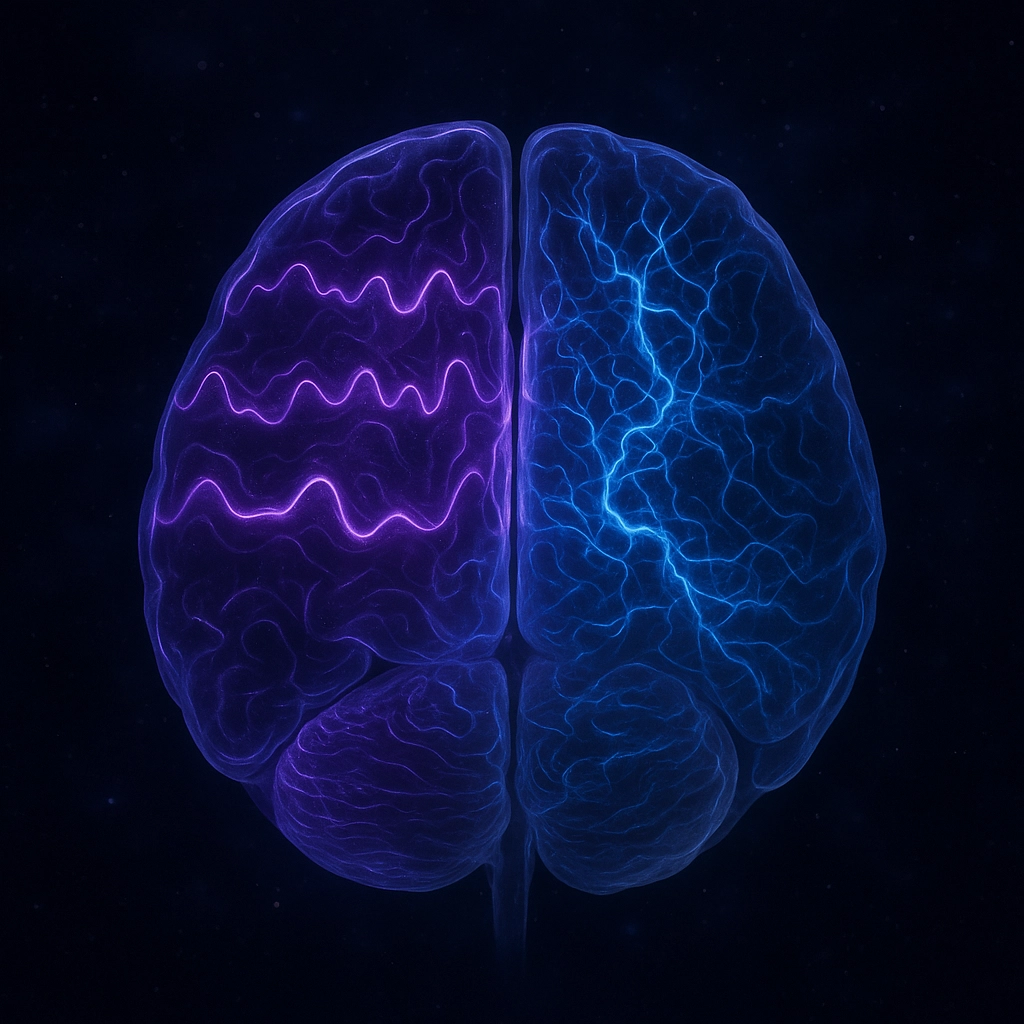
At the neurological level, breathwork induces remarkable changes in brain wave patterns that you can actually measure. Slow breathing techniques increase EEG alpha power: brain waves associated with relaxed awareness and creative flow states: while decreasing EEG theta power linked to anxiety and overthinking.¹
Advanced neuroimaging reveals even deeper transformations. Functional MRI studies demonstrate that intentional breathing activates multiple brain regions simultaneously: the prefrontal cortex (executive function and emotional regulation), motor cortex (voluntary control), parietal cortex (spatial awareness), and crucial subcortical areas including the thalamus and hypothalamus that govern your internal bodily states.¹
This neural orchestra creates a comprehensive recalibration of your entire nervous system, shifting you from reactive patterns into conscious, regulated responses. The changes extend far beyond the practice itself, creating lasting improvements in how your brain processes stress and maintains equilibrium.
Research-Backed Benefits for Body and Mind
These nervous system transformations produce concrete, measurable benefits that extend into every aspect of your well-being:
Physical Restoration:
Significantly lowered resting heart rate and blood pressure²
Reduced cortisol and stress hormone production²
Enhanced digestive function and immune response²
Decreased systemic inflammation²
Emotional and Psychological Transformation:
Improved emotional regulation and resilience¹
Enhanced sense of calm and inner stability²
Greater psychological well-being and life satisfaction¹
Increased capacity for joy and positive emotional states
A groundbreaking Stanford Medicine study revealed that just five minutes daily of cyclic sighing: a specific breathwork technique involving slow, extended exhalation: significantly reduced anxiety and improved mood more effectively than mindfulness meditation.⁴
Perhaps most remarkably, participants continued breathing more slowly throughout their entire day, indicating that brief breathwork sessions create lasting physiological adaptations that support nervous system regulation around the clock.⁴
Specific Techniques That Create Lasting Change
Different breathing techniques work through complementary pathways to regulate your nervous system, each offering unique benefits backed by scientific research:
The Psychological Sigh: This technique involves a double inhalation followed by extended exhalation. Research shows it balances activity between brain hemispheres and proves particularly effective for emotional regulation when feeling overwhelmed or overstimulated.² This simple practice can shift your nervous system state within seconds.
The 4-7-8 Technique: Inhaling for 4 seconds, holding for 7, and exhaling for 8 counts directly regulates nervous system activation through extended exhalation.⁵ The longer exhale stimulates vagal tone and promotes parasympathetic dominance.
Six Breaths Per Minute Protocol: Studies consistently find that breathing at approximately 6 breaths per minute: significantly slower than the typical 12-20 breaths per minute: produces the most reliable improvements in both autonomic nervous system function and psychological outcomes.¹

The effectiveness of these techniques lies in their ability to consciously influence typically unconscious processes, creating new neural pathways that support lasting nervous system regulation and emotional resilience.
The Deeper Mechanisms of Transformation
Scientists have identified fascinating mechanisms that explain breathwork's profound effects on nervous system regulation. Research points to two primary pathways:
Interoceptive Regulation: Intentional breathing enhances your ability to perceive and regulate internal bodily states: what neuroscientists call interoception. This heightened internal awareness allows for more precise nervous system modulation and emotional self-regulation.¹
Neural Entrainment: Rhythmic breathing patterns may directly influence brain rhythms through respiratory entrainment, synchronizing neural circuits that govern cognition, mood, and stress response. This creates coherent communication between different brain regions, supporting integrated nervous system function.³
Mechanoreceptor Activation: Specialized receptors in your nasal cavity respond to breathing patterns, influencing the olfactory bulb and subsequently tuning activity across your entire cortex. This pathway helps explain why nasal breathing often proves more effective than mouth breathing for nervous system regulation.¹

These mechanisms work synergistically to create comprehensive nervous system transformation that extends far beyond the breathing session itself, establishing new baselines for calm, resilience, and emotional balance.
Experience Advanced Nervous System Regulation
For those ready to experience the profound nervous system shifts that breathwork can create, advanced techniques like 9D Breathwork combine intentional breathing with binaural brain entrainment, guided visualization, and somatic movement to create comprehensive nervous system recalibration.
This is for anyone seeking to transcend surface-level relaxation techniques and access deep, lasting transformation in how your nervous system responds to life's challenges. Through scientifically-backed practices that honor both the clinical research and the sacred nature of this work, you can reclaim your birthright of inner peace and emotional sovereignty.
Ready to experience the transformative power of evidence-based breathwork for nervous system regulation? Discover 9D Breathwork sessions designed to create lasting shifts in your autonomic nervous system and overall well-being.
References:
Zaccaro, A., et al. (2018). How breath-control can change your life: a systematic review on psycho-physiological correlates of slow breathing. Frontiers in Human Neuroscience, 12, 353.
Gerritsen, R. J., & Band, G. P. (2018). Breath of life: The respiratory vagal stimulation model of contemplative activity. Frontiers in Human Neuroscience, 12, 397.
Laborde, S., et al. (2022). Heart rate variability and cardiac vagal tone in psychophysiological research–recommendations for experiment planning, data analysis, and data reporting. Frontiers in Psychology, 13, 876437.
Balban, M. Y., et al. (2023). Brief structured respiration practices enhance mood and reduce physiological arousal. Cell Reports Medicine, 4(1), 100895.
Weil, A. (2011). Spontaneous Healing: How to Discover and Enhance Your Body's Natural Ability to Maintain and Heal Itself. Ballantine Books.
Comments