Somatic Breathwork 101: A Beginner's Guide to Releasing Trauma Stored in Your Body
You've probably heard the phrase "the body keeps the score." It's not just a catchy book title: it's a scientific truth that's reshaping how we understand healing. Your body remembers everything. Every stressful moment, every overwhelming experience, every trauma you've carried is stored somewhere in your tissues, your muscles, your nervous system.
And here's the breakthrough: somatic breathwork offers a powerful pathway to finally release what words alone cannot reach.
If you've been searching for a way to release trauma, regulate your nervous system, and reclaim a sense of wholeness in your body, this guide is for you.
What Is Somatic Breathwork?
Somatic breathwork is a body-centered healing modality that uses conscious, intentional breathing patterns to access and release emotional and physical tension stored deep within your body. Unlike traditional talk therapy, which works primarily through the cognitive mind, somatic breathwork bypasses the thinking brain and speaks directly to your nervous system.
The word "somatic" comes from the Greek soma, meaning "body." This practice honors the profound truth that healing isn't just a mental process: it's a full-body experience.
By combining ancient breathing wisdom with modern neuroscience, somatic breathwork creates a sacred bridge between your conscious awareness and the subconscious patterns held in your cellular memory.

The Science: How Trauma Gets Stored in Your Body
Dr. Bessel van der Kolk's groundbreaking research, published in his book The Body Keeps the Score, reveals that traumatic experiences literally reshape our brains and bodies. Trauma isn't just "in your head": it lives in your muscles, your posture, your breath patterns, and your autonomic nervous system responses (van der Kolk, 2014).
When you experience something overwhelming, your nervous system activates the fight-or-flight response. But when you can't fight or flee: when you freeze: that survival energy gets trapped. Your body holds onto it as chronic tension, hypervigilance, shallow breathing, or a constant sense of unease.
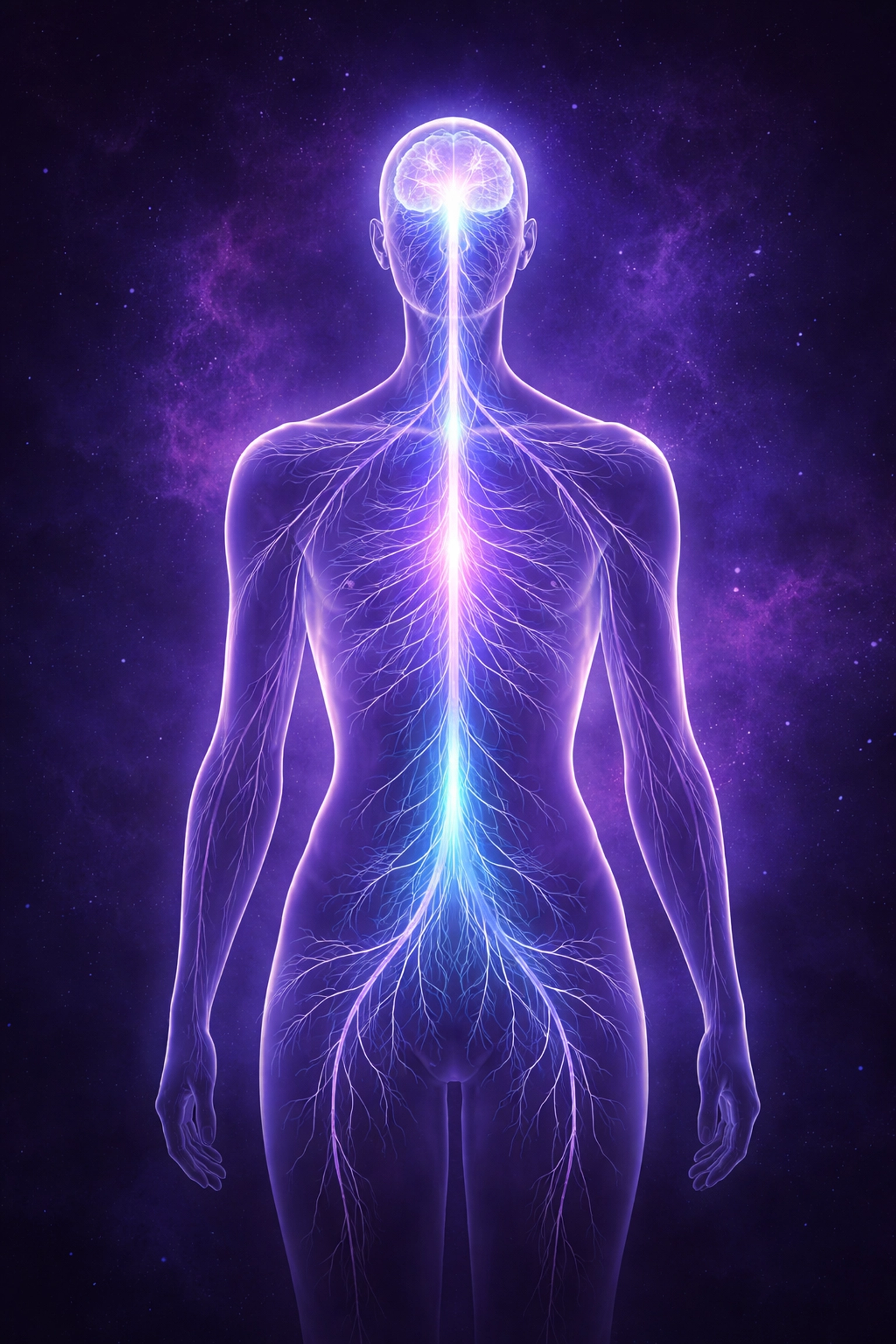
This is where polyvagal theory, developed by Dr. Stephen Porges, becomes essential to understanding healing. Polyvagal theory explains how your vagus nerve: the longest nerve in your body: regulates your sense of safety and connection (Porges, 2011). When your nervous system is stuck in a defensive state, you experience anxiety, disconnection, and emotional dysregulation.
Nervous system regulation through breathwork directly targets this vagal pathway, helping your body shift from survival mode into a state of safety, rest, and restoration.
The Somatic-Cognitive Cycle: Why Breath Is the Key
Here's something powerful: your breath is the only autonomic function you can consciously control. This makes it a direct gateway to reprogramming your nervous system.
When you engage in somatic breathwork, you initiate what researchers call the somatic-cognitive cycle: a feedback loop between your body's physical state and your mental-emotional experience. By changing your breath, you change your physiology. By changing your physiology, you shift your emotional state.
Parasympathetic activation: the "rest and digest" response: occurs when you extend your exhales, slow your breathing, and engage your diaphragm. This sends a direct signal to your brain: You are safe. You can release.
How Somatic Breathwork Releases Trauma
Unlike cognitive approaches that ask you to think your way through trauma, somatic breathwork invites you to feel and release at a cellular level.
Here's how the transformative process works:
1. Conscious Connected Breathing
Through specific breathing patterns: often rhythmic, continuous breaths: you begin to bypass your analytical mind. This creates space for suppressed emotions and body sensations to surface naturally.
2. Nervous System Regulation
As you breathe with intention, your vagus nerve receives signals of safety. Your heart rate variability improves. Your body transitions from sympathetic (stressed) to parasympathetic (calm) dominance.
3. Emotional Release
With continued practice, emotions that have been stored: grief, anger, fear: begin to move through and out of your body. Many people experience crying, shaking, tingling, or profound waves of relief during sessions.
4. Integration and Restoration
After release comes integration. Your nervous system recalibrates. You feel lighter, more present, more connected to yourself.
This is the pathway to liberating your body from patterns that no longer serve you.
Beginner-Friendly Breathwork Techniques to Try
Ready to begin your journey? Here are simple techniques to start regulating your nervous system today:
Diaphragmatic Breathing
Place one hand on your chest, one on your belly. Inhale slowly through your nose, letting your belly rise while your chest stays still. Exhale slowly through your mouth. This activates parasympathetic response and grounds your energy.
When to use it: Anytime you feel anxious, before bed, or as a daily morning practice.
The Extended Exhale
Inhale for 4 counts through your nose. Exhale slowly for 6-8 counts through your mouth. The longer exhale signals safety to your nervous system.
When to use it: During moments of overwhelm, before difficult conversations, or when you can't sleep.
Box Breathing
Inhale for 4 counts. Hold for 4 counts. Exhale for 4 counts. Hold for 4 counts. Repeat.
When to use it: When you need focus, calm, and mental clarity: perfect before meetings or stressful situations.

This Is For You If...
This transformative practice is for anyone who:
Has tried talk therapy but still feels stuck in their body
Experiences chronic anxiety, tension, or emotional numbness
Yearns to feel safe and at home in their own skin
Is ready to release what they've been carrying for far too long
Seeks a holistic approach that honors both science and spirit
You don't need to understand your trauma to heal it. You simply need to breathe: and let your body do what it was always designed to do: return to wholeness.
Your Next Step: Experience Guided Somatic Breathwork
While these techniques are powerful on their own, the deepest releases often happen within a guided, immersive experience. At Vero Beach Aura, we combine somatic breathwork with sound healing, binaural brain entrainment, and nervous system regulation techniques to create profound transformation.
If you're ready to go deeper, book a 9D Breathwork session and experience what it feels like to finally let go.
Your body has been waiting for this. Trust the journey.
References
Porges, S. W. (2011). The Polyvagal Theory: Neurophysiological Foundations of Emotions, Attachment, Communication, and Self-Regulation. W. W. Norton & Company.
van der Kolk, B. (2014). The Body Keeps the Score: Brain, Mind, and Body in the Healing of Trauma. Viking.
Gerritsen, R. J. S., & Band, G. P. H. (2018). Breath of Life: The Respiratory Vagal Stimulation Model of Contemplative Activity. Frontiers in Human Neuroscience, 12, 397. https://doi.org/10.3389/fnhum.2018.00397
Brown, R. P., & Gerbarg, P. L. (2005). Sudarshan Kriya Yogic Breathing in the Treatment of Stress, Anxiety, and Depression. Journal of Alternative and Complementary Medicine, 11(4), 711-717.
Comments